The NABO Atlas
Karibu. Build. Awaken.
Linke’s home for cob architecture, manyattas and indigenous earth construction, where wellness and design meet the wisdom of the land.
An invitation
Every mountain is a teacher. Every tree is a memory. Every cob home carries the heartbeat of generations.
The Earth has always known how to heal.
The living blueprint
Built from field notes, not factories
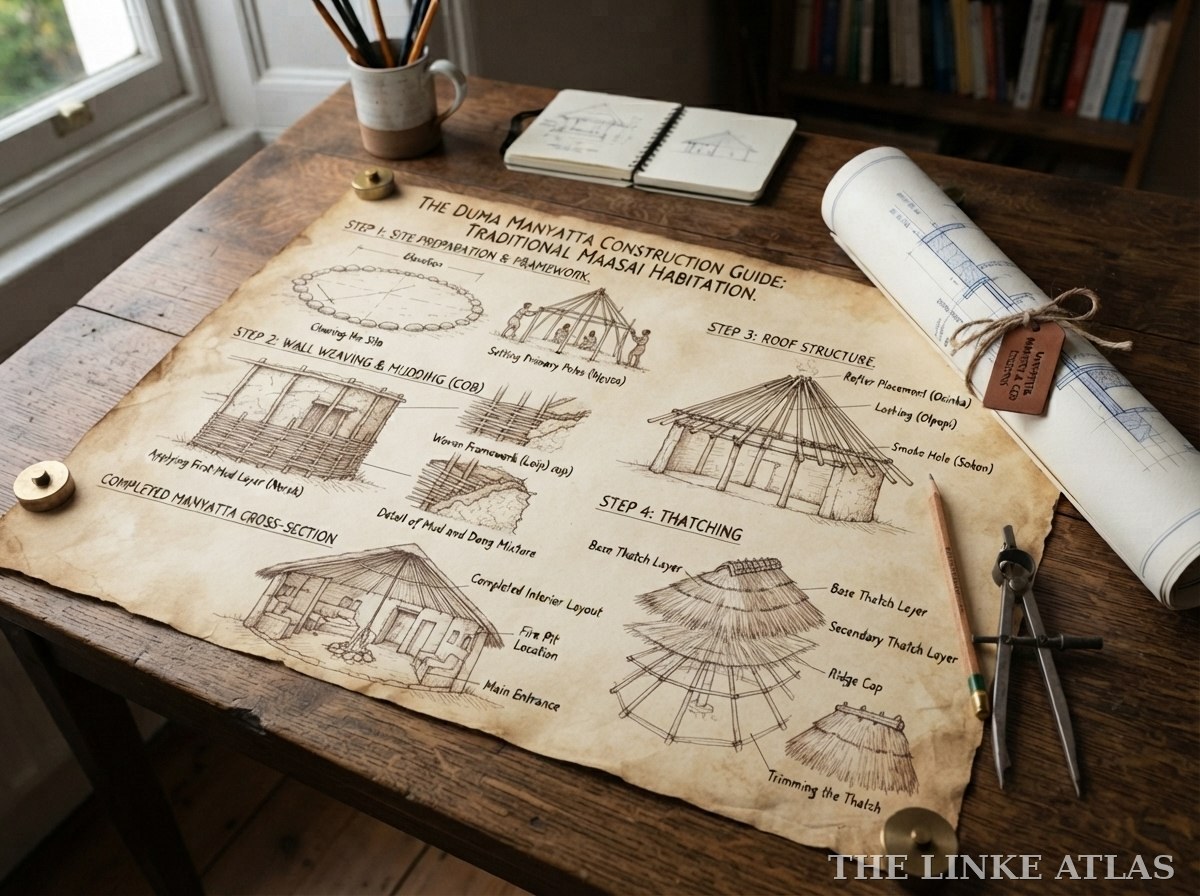
Every manyatta begins the same way generations before it did: clearing the site, weaving the wall frame, layering earth and dung into cob, thatching in overlapping courses. Nothing here was invented by an engineer. It was inherited.
Read: Building a Manyatta, Step by Step →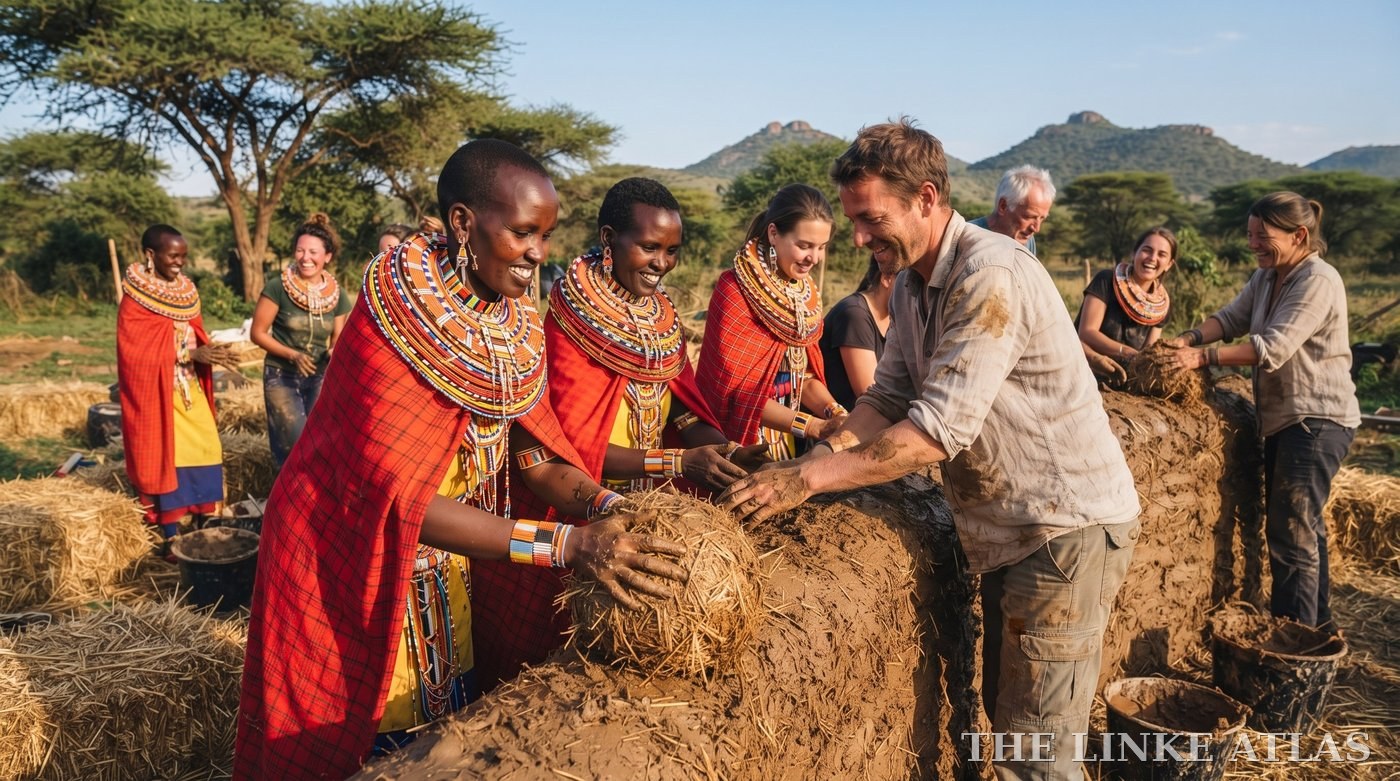
Community construction
Architecture as culture, not just shelter
Women mix the earth, carry the water and shape the walls, while elders guide and children watch. Knowledge passes from one generation to the next, one handful of mud at a time.
Across Samburu land, homes are living expressions of the relationship between people, place, climate and community. Every wall remembers the hands that shaped it. The NABO Atlas preserves these living blueprints so future generations can build with the Earth instead of against it.
Three ways of building
The NABO Atlas categories
Living with the land
Built from the Earth
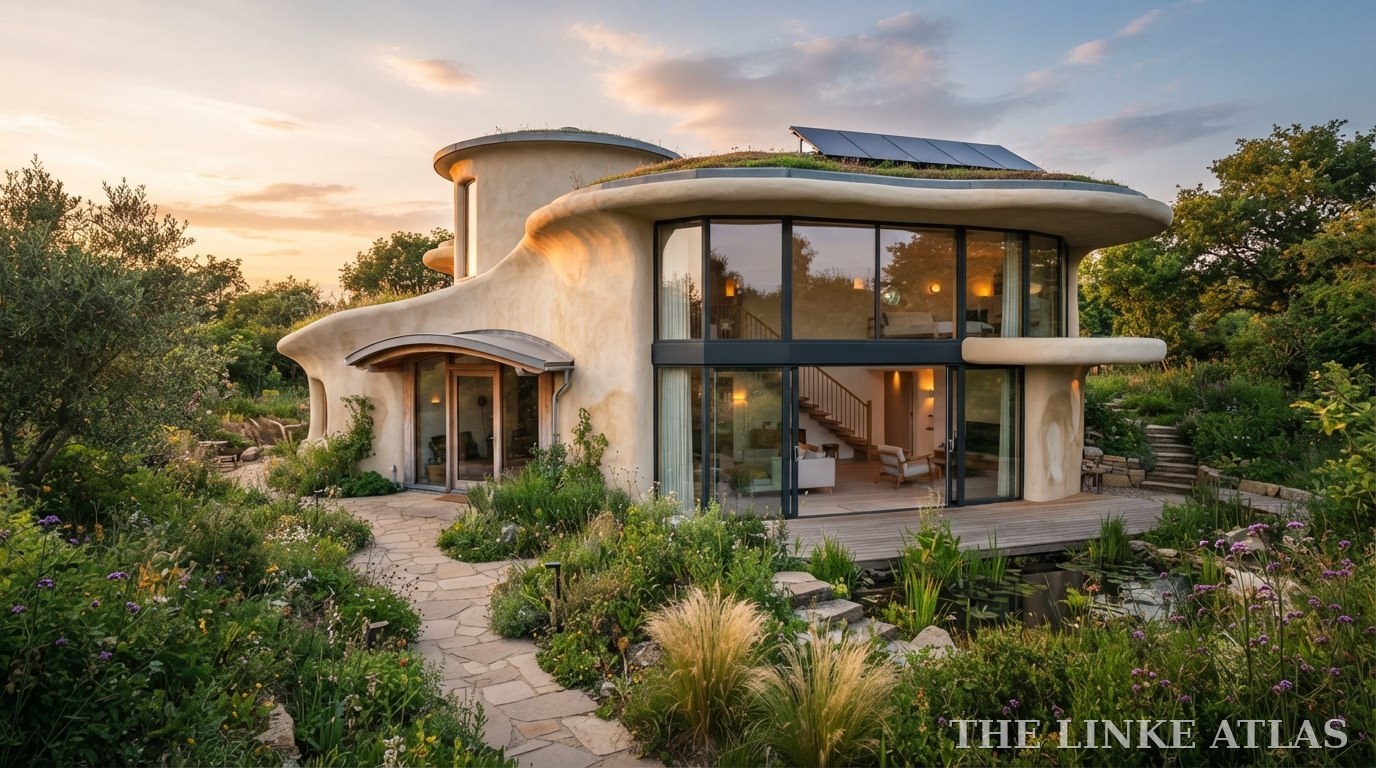
Cob homes, earth walls and natural insulation shaped from local materials: passive cooling and climate resilience that ask nothing of the grid.
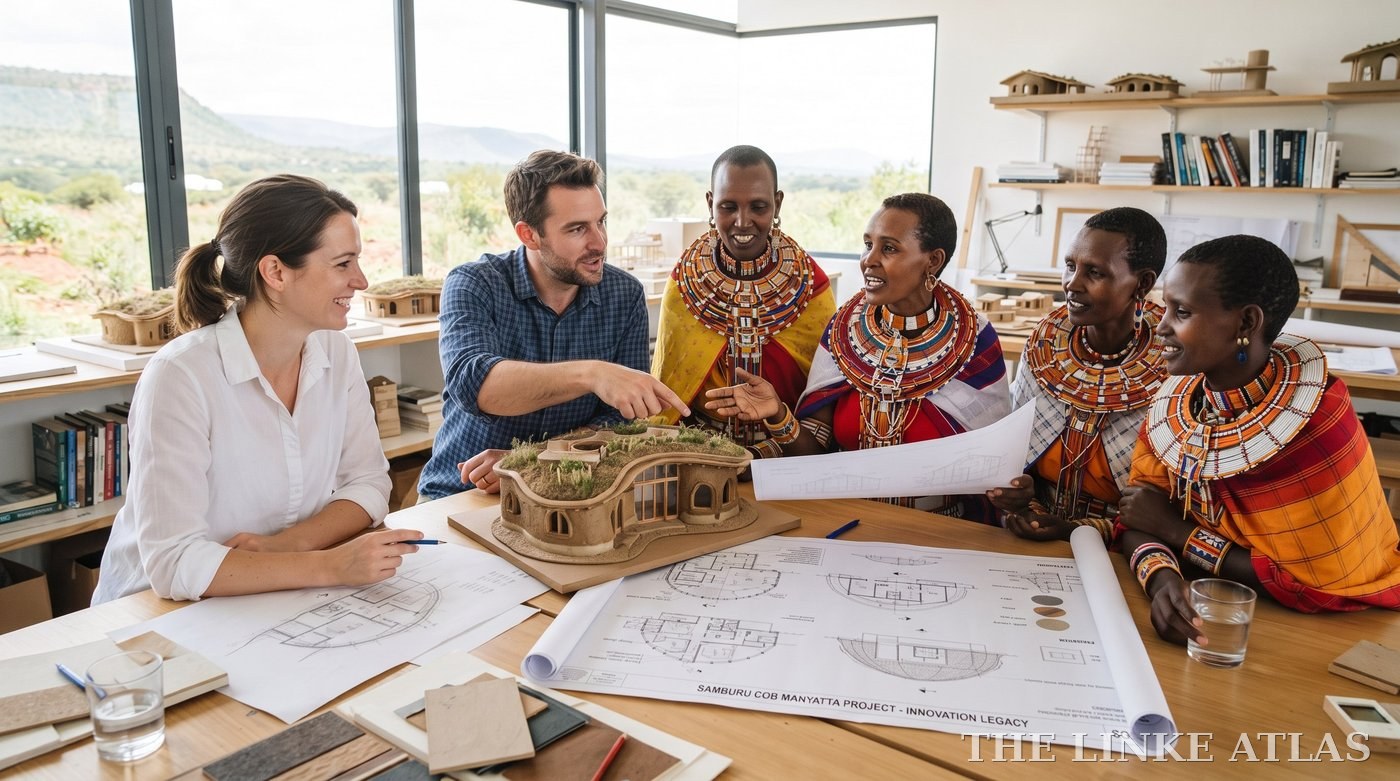
Building together
Built by Community
Women’s craftsmanship, indigenous planning and shared knowledge passed between generations: architecture as cultural identity.
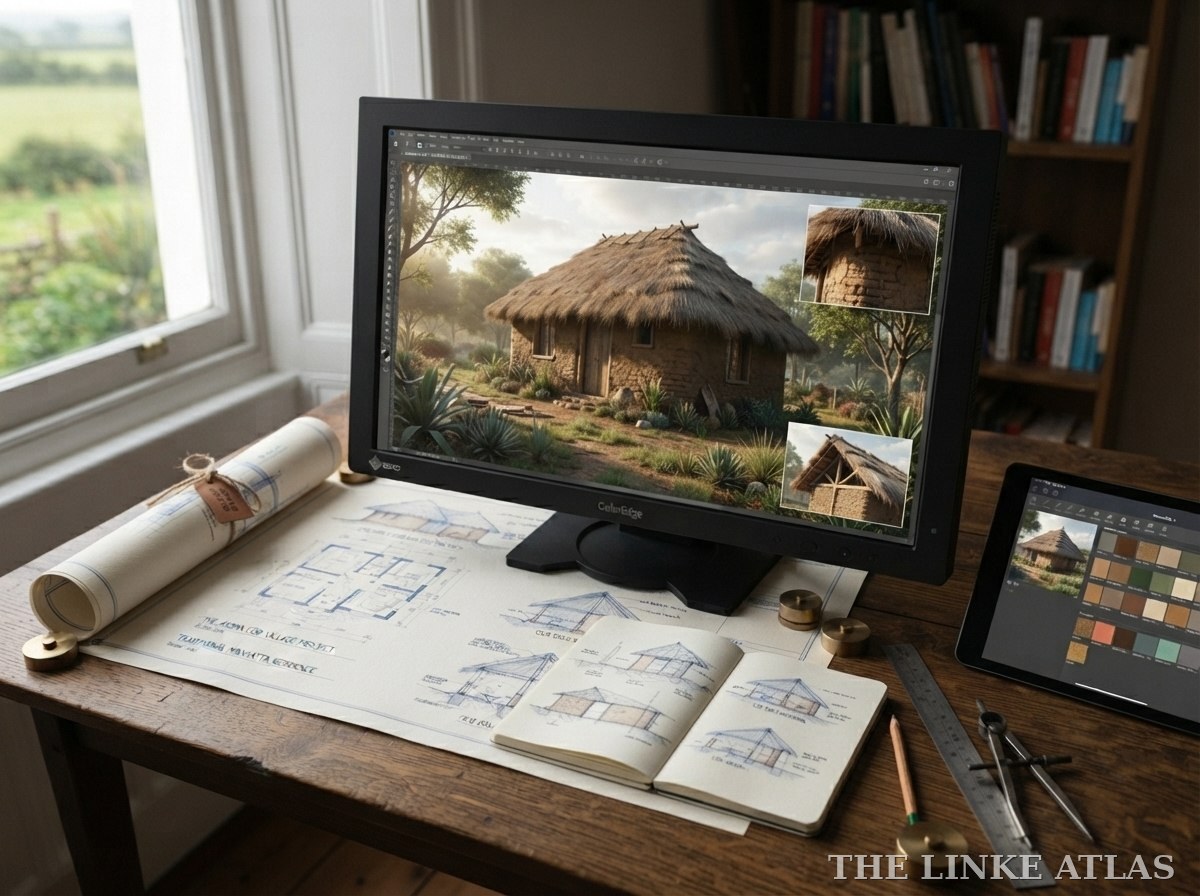
Homes that breathe
Built to Breathe
Natural ventilation, healthy materials and biophilic design: wellness and sustainability in harmony with nature.
The architects of the Atlas
The women builders
Neltoijo was inspired to study interior design to understand how every detail of the universe fits together, and found the best teachers already at home: the Samburu women who are the architects, designers and engineers of every home.
No blueprint
The map in the mind
A Samburu woman does not begin with drawings. She begins with a map held in her mind: where the sun rises, which way the wind comes, how the ground slopes and where water will run when the rains arrive. Maa-speaking women have traditionally built homes as tall, or as short, as themselves, so the plan is carried in memory and in the body. No modern architect works with a finer instrument.
Recycled by design
Soil, sticks and dung
The materials come from the land and the herd: flexible sticks and branches for the frame, mud and cow dung for the walls, hides, grass or sisal for the roof. Language records describe plastering with fresh dung, or dung mixed with urine to keep it soft, and smearing the roof again with dung or mud. Nothing is bought, nothing is wasted, and when the home is left it goes back to the earth.
Homes that travel
Built, dismantled, carried
Women build and dismantle the houses, help each other with the work and organise the transport when the herd moves, so a house is never too elaborate to take apart. Archaeologist Brendan O’Neill’s 2019 learning lab in Samburu, where mostly women taught students to build the nkaji, linked this vernacular architecture to climate change and cultural change, under the title Vanishing Houses.
Blessed hands
The respect of the craft
Among Maa-speaking peoples a woman earns respect by how she builds and keeps her house, and the speed at which she can raise one matters. I call them blessed hands. Every wall holds the pressure of a palm and the rhythm of a body at work, and every home is the signature of the woman who made it.
Frequency
The vibration of the hands
I think of building as frequency. Hands pressing earth into a frame set up a rhythm, the rhythm becomes a shape, and the shape becomes a home that holds warmth, rain and a family. It is semantics in mud: meaning made physical, a divine language older than words, written in curves instead of letters.
Why it matters
Built to the world’s goals, without a blueprint
The targets the United Nations, UN-Habitat and the African Union have set for the future are things Samburu women have practised for generations.
UN-Habitat · SDG 11
Adequate, sustainable housing
UN-Habitat’s mandate is sustainable urbanization and adequate housing for all. SDG 11 asks for inclusive, safe, resilient and sustainable communities, and its target 11.c calls for support to build sustainable, resilient buildings using local materials. UN-Habitat’s World Cities Report 2026 estimates that up to 3.4 billion people lack adequate housing, and its 2026 SDG 11 Global Report finds the goal off track. Its 2026 Scroll of Honour recognised culturally appropriate housing for Indigenous communities. An earth home built from local materials answers that goal directly.
SDG 12 · SDG 13
Reuse, recycle, adapt
Target 12.5 asks the world to reduce waste through prevention, reduction, recycling and reuse. A manyatta does all four. Earth walls also keep heat out by day and hold it in at night, a passive cooling that asks nothing of the grid and helps a community adapt to a changing climate.
SDG 5 · SDG 8
Women as architects
SDG 5 calls for gender equality and for women’s full participation and leadership. Women’s building skill is leadership in plain sight, and when it is trained, credited and paid it becomes the decent work and livelihood that SDG 8 asks for.
United Nations · Indigenous peoples
Knowledge as heritage
The UN Declaration on the Rights of Indigenous Peoples recognises the right of peoples to maintain, protect and develop their cultural heritage and traditional knowledge. The way a Samburu home is made, from the first stick to the last smear of dung, is exactly that kind of knowledge.
African Union · Agenda 2063
The Africa we want
Agenda 2063 sets seven aspirations. Aspiration 1 includes environmentally sustainable, climate-resilient economies and communities. Aspiration 5 is a strong cultural identity and common heritage. Aspiration 6 is development that is people-driven and relies on the potential of African women and youth. A Samburu woman building with the land touches all three at once.
Connect with the builders
Women warriors of the build
These are the builders who carry the craft forward, and speak up for the livelihoods that depend on it. They stand for the right to build with the earth, for shared ownership of the work and for the next generation of builders.
Around them, community organisations stand for the same cause. The Wamba Small Scale Farmers Forum works on women’s earth-building wisdom, youth guardianship and regenerative land stewardship, and the Nayiai Foundation in Maralal runs women’s and youth empowerment programmes, including beadwork enterprise training. Naisula Lesuuda’s peace foundation does the same for girls’ education. Each of them treats a woman’s skill as a livelihood that deserves defending.
Type of building
Community sustainable building
A Samburu woman builder leading community-driven, sustainable cob construction. She brings entire villages into the build, training hands, sharing skills and rooting every home in collective ownership.
Type of building
Traditional Samburu cob homes
A keeper of the traditional manyatta form, building cob homes as generations before him did: hand-woven wall frames, layered earth and dung, and thatching passed down through lineage.
Type of building
Modern scaled building
Brings cob construction to a larger scale: eco lodges, retreat compounds and multi-room homes that pair traditional earth-building with modern design and off-grid power.
These builders work independently of The Linke Atlas. Their stories are shared here as a guide to how Samburu homes are made, and to honour the people who make them.
Beyond a single build
Consultancy services
Planning a larger project, a lodge, or a development that needs earth-building expertise from the ground up? NABO builders advise as well as build, across six areas.
Site Assessment & Feasibility
On-site evaluation of soil, terrain and climate to determine whether cob and earth-building techniques suit your land before you commit to a design.
Architectural Design & Planning
Custom design guidance for eco-lodges, homes and retreat spaces, blending traditional cob form with the layout and scale your project needs.
Sustainable Materials Advisory
Guidance on sourcing local earth, fibre and finishing materials, and getting the mix ratios right for durability in your specific climate.
Off-Grid Systems Integration
Advisory on pairing earth-building with solar power, rainwater harvesting and passive cooling for genuinely self-sufficient structures.
Training & Capacity Building
Structured workshops for teams who want to learn cob techniques directly from NABO builders, for a project you will build yourselves.
Community Build Program Advisory
Advisory support for NGOs, lodges and institutions planning community-built structures at scale, from planning through to training local builders.