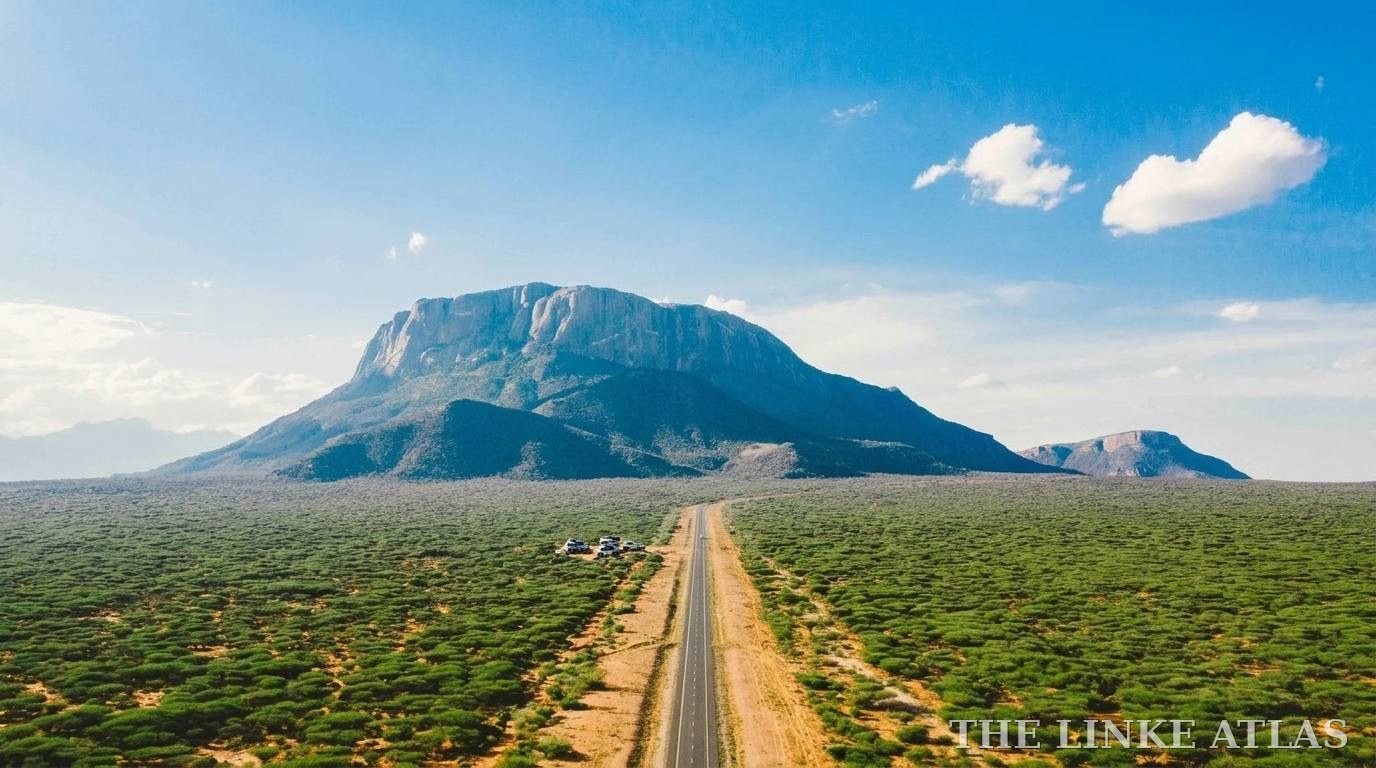
Samburu has some of the darkest skies in Kenya. Go in the dry seasons, plan around the new moon and bring a guide who knows the sky stories.
- Best seasons
- Dry seasons: roughly December to March and June to October
- Best nights
- The few nights either side of a new moon
- Why here
- High, clean, dry air, almost no artificial light, and a position on the equator that shows both northern and southern skies
- Look for
- Scorpius and Sagittarius, the Southern Cross, the Milky Way, and bright planets
- Wear
- A warm layer. Nights are mild on the plains but cold and windy on the summit of Ololokwe
The seasons
Clear skies matter more than anything else. Tourism sources for the region agree that the dry months are best: June to October and, for a second window, December to March (some give January to March). The long rains in March to May and the short rains around November bring cloud and mud, so plan around them if the sky is your reason for coming.
The moon
A bright moon washes out fainter stars and the Milky Way. For the darkest sky choose a few nights either side of a new moon. These are approximate new moon dates, worked out for East Africa time and good to within about a day, so check a moon calendar when you book:
- About 10 November 2026
- About 9 December 2026
- About 8 January 2027
- About 6 February 2027
- About 8 March 2027
- About 4 June 2027
- About 4 July 2027
- About 2 August 2027
- About 1 September 2027
- About 30 September 2027
What you can see
Because Samburu sits on the equator, you can see both hemispheres of the sky from one spot. Tourism writers mention Scorpius, Sagittarius, the Southern Cross and the glowing Milky Way, and astronomers say the planets Mercury, Venus, Mars, Jupiter and Saturn are often visible across the December to March period. A partial solar eclipse is expected over Kenya in 2027.
The Samburu sky
The sky is a story as well as a view. In the Samburu creation story people first lived on Venus, the morning star, and came down to earth by a ladder let down by Nkai. Women wear star-shaped pendants that point back to it, and the lines of elders at a wedding blessing echo the pattern of Orion. Read more in Samburu Star Names and Sky Stories. A night under the Ololokwe sky is worth more with a guide who can tell the stories as well as point out the stars.
Tips for a good night
- Let your eyes adjust for 20 to 30 minutes and use a red torch or a phone on its dimmest red setting.
- Use a free sky app such as Stellarium to name what you see.
- Bring a mat or blanket, a warm layer and a hot drink.
- Ask your host whether stargazing sessions are available, and book ahead.
- Stay with a guide at night: wildlife, including elephants, moves around after dark.
Where to stay for the sky
Sabache Camp
At the foot of Ololokwe, the usual starting point for the climb. Published accounts describe rooms and camping, with meals and a local Samburu guide. Contact the camp directly for current prices and availability.
Visit sabachecamp.comArchers Samburu
A four-bedroom homestay villa in Archers, Samburu, 1 km from Samburu National Park, listed on our Partners page.
About this partnerLaikipia Mara Homestay
A community partner in Makutano, Nanyuki, on the Nanyuki–Meru Road. Executive Airbnb-style stays with king-size beds, fast Wi-Fi, a work table, 24-hour security and parking. Nanyuki sits on the A2 route north from Nairobi, around 200 km out, so it breaks the drive well.
About this partnerSamburu safaris
Game drives and guided days around Samburu National Reserve and the conservancies.
See safari optionsAffiliate links: if you book through a stay or safari link on this page, we may earn a small commission at no extra cost to you. Links are marked as sponsored.
Take the guide with you
The free Ololokwe Visitor Field Guide puts the essentials in one short PDF: the route, the hike, respect on the mountain, the sky and where to stay.
Facts checked in October 2026 against published sources, which sometimes disagree. Fees, opening arrangements and road conditions change, so confirm with your host or guide before you travel.
Sources: Sopa Lodges, The art of stargazing (June 2026); National Geographic partner content, Five unforgettable experiences in Samburu; Business Daily Africa, Kenya’s darkest sky: why Samburu is a stargazer’s heaven; Timbuktu Travel, best time to visit Samburu; our own journal piece, Samburu Star Names and Sky Stories. New moon dates are our own approximations.