Certain groves, springs, and rock formations carry meanings outsiders rarely learn, along with rules about how, or whether, they should be visited.
In the north, some places are more than places. A mountain, a spring or a grove of old trees can be a prayer house, a graveyard, a source of rain or the home of an ancestor. People here walk these places with care, and often with company, because to the Samburu the land is not empty and never has been.
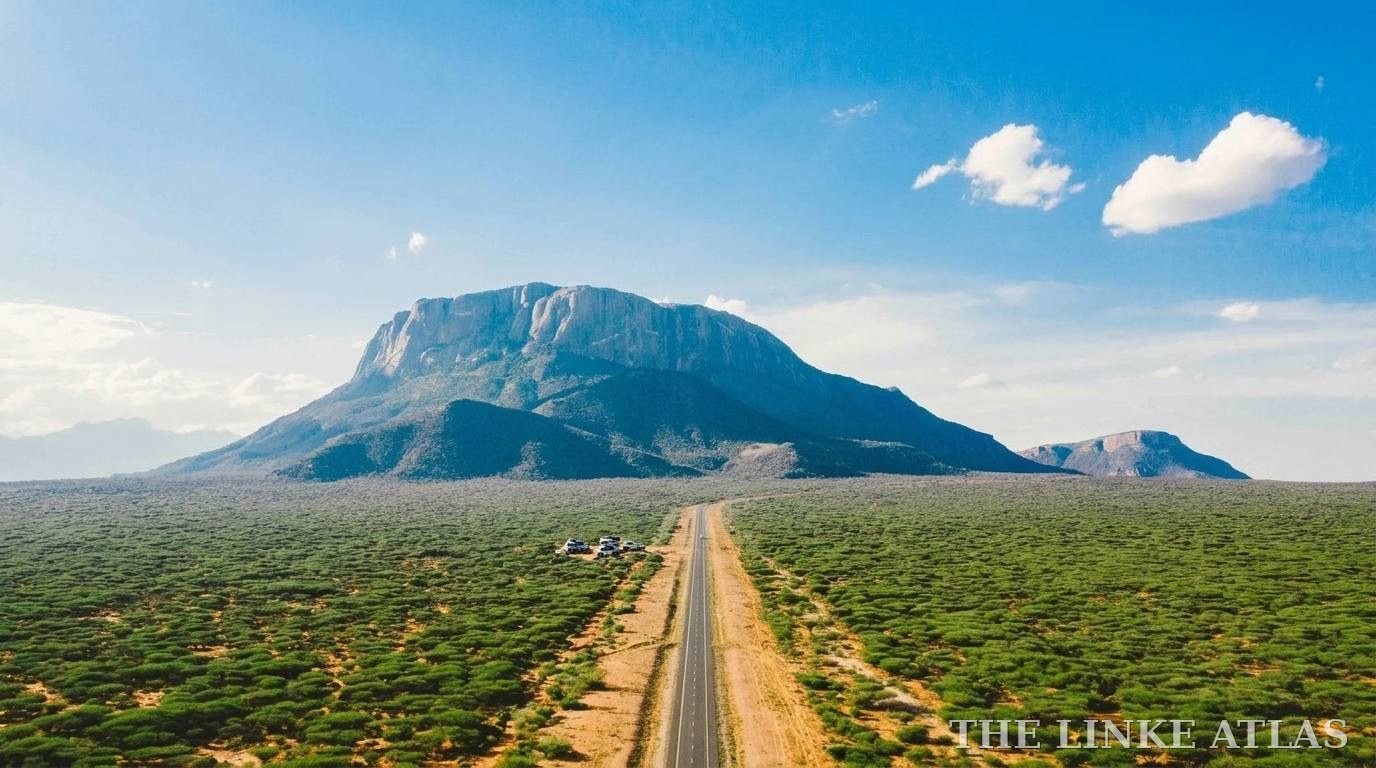
Ololokwe is the best-known example. Samburu people say that the mountain is the source of water and food for their herds. In drought, women walk up the slopes to pray to Nkai for rain, and elder women pour milk on the rock as an offering. Boys' passage ceremonies, ritual feasts and rain prayers have taken place on its flanks. First-time visitors are invited to add a stone to a cairn near the summit and to make a wish, a small gesture of respect that visitors can join.
Mount Nyiro, rising above the village of Tum, is another sacred mountain. The Samburu diviners of the Lesepen family lived beneath it, and Rhodia Mann was told that timing an important ceremony was their task, done by reading the sky.
The rules are often practical as well as spiritual. A spring that is treated as sacred is a spring that is protected, and a grove that no one cuts is a grove that holds water in the soil. In that sense sacred sites are among the oldest conservation areas in the north, much older than any park boundary.
That is why we walk with guides. A Samburu guide knows where you can go and where you should ask first, what to carry, when to stay quiet and when to join in. The invitation to walk with someone is a form of trust, and the right way to accept it is to follow their lead.
Sacred sites are heritage in the sense of SDG target 11.4 and of Agenda 2063's cultural renaissance, and the UN Declaration on the Rights of Indigenous Peoples recognises the right of peoples to maintain their spiritual relationship with their lands. Sacred means tuned: a place whose frequency people have agreed to respect.
Sources: Safaricom Places of Hope (May 2023); Paukwa (National Museums of Kenya), Samburu; Nation Africa, The sacred mountain; The Star (Kenya), Museum displays beauty of the Samburu culture (25 July 2024).